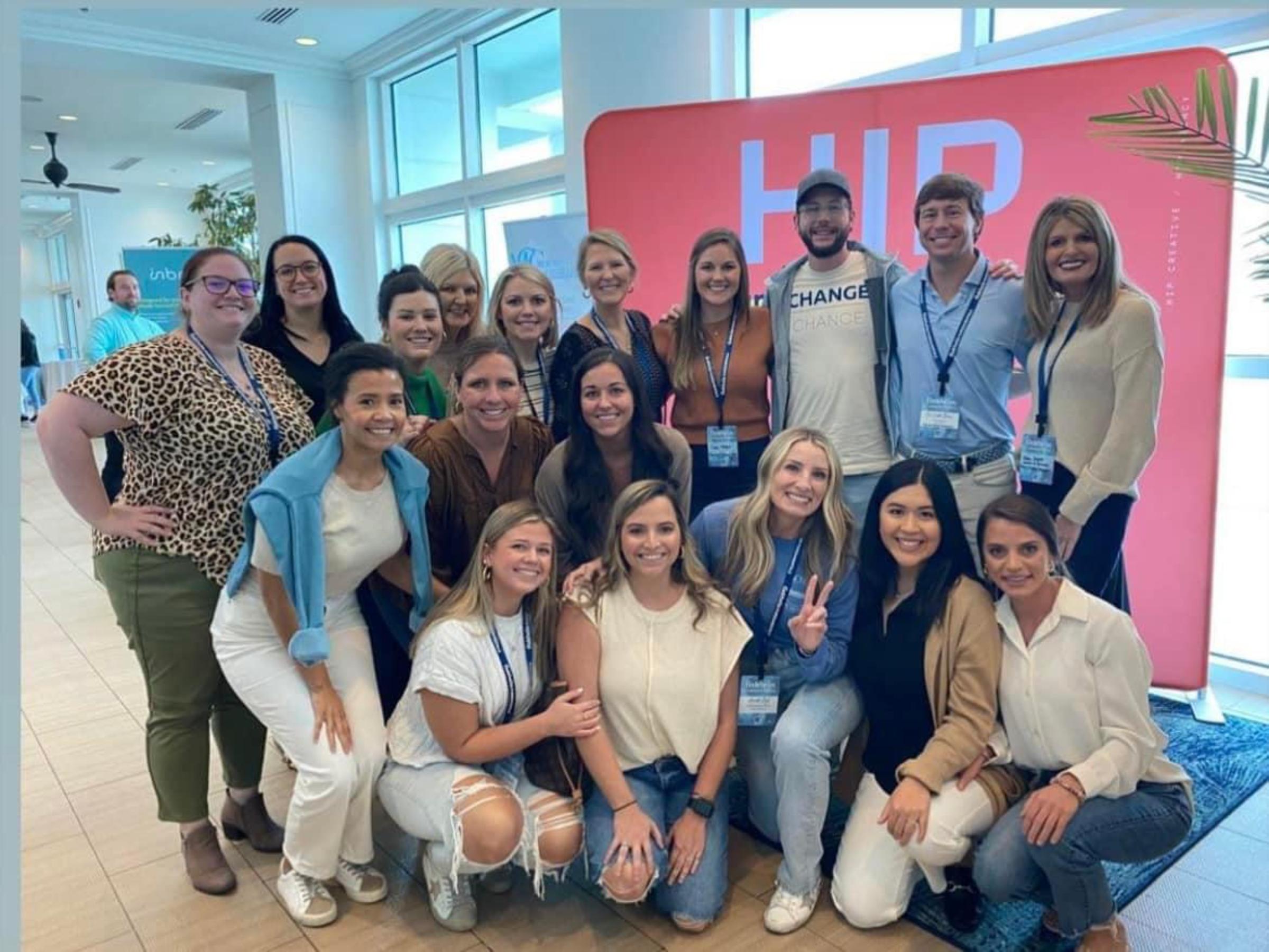
What if your team didn’t need you to make every decision? What if problems got solved before they hit your desk, and your front office handled a tough patient conversation without a glance in your direction? That’s the promise of orthodontic leadership consulting: building a team that takes ownership. At Amanda Floyd Consulting, we help doctors shift from being the bottleneck to being the leader of a team that genuinely owns its work.
This isn’t about adding more scripts or checklists. It’s about changing the culture underneath them.
What Is Orthodontic Leadership Consulting?
Orthodontic leadership consulting is advisory work focused on culture, accountability and team ownership, not just day-to-day operations. At Amanda Floyd Consulting, we partner with practice owners to transfer decision-making from the doctor to the team, so your office runs well whether you’re chairside, on vacation or opening a second location.
It’s different from the usual options you’ve probably tried:
- Coaching typically focuses on the doctor’s mindset and goals.
- 1-on-1 team member training teaches a specific skill, like treatment coordinator conversations or clinical efficiency.
- Private consulting rebuilds systems and workflows.
Leadership consulting pulls from all three but centers on something deeper: the behaviors, language and expectations that create an ownership culture. Our work is rooted in orthodontic-specific workflows and team dynamics, which matters because an orthodontic front desk, treatment coordinator and clinical team function nothing like a general dental practice.
The outcome? A team that spots issues, raises them, solves them and keeps you informed, instead of waiting for you to notice and fix every little thing.
How Leadership Consulting Builds an Ownership Culture
Culture doesn’t change because you hang new values on the wall. It changes when people have clear roles, honest feedback and the authority to act. Here’s how Amanda Floyd Consulting walks a practice through that shift.
- Deep dive and discovery. We start by observing your team in action during real patient days, assessing accountability gaps, communication breakdowns and where decisions are getting stuck. This is a working observation led by Amanda Floyd and informed by Dr. Ben Fishbein’s active practice at Fishbein Orthodontics.
- Define core values and clarify roles. We help you articulate what your practice actually stands for, then map every role on an org chart so team members know what they own.
- Install the right systems. SMART goals, structured one-on-ones, scorecards and KPIs give the team a way to measure outcomes instead of just completing tasks.
- Train the doctor to lead, not manage. Letting go without losing control is a learned skill. We coach you on when to step in, when to step back and how to hold the team accountable without micromanaging.
- Coach the team on ownership behaviors. We work directly with team members on the language of ownership: how to raise concerns, propose solutions and follow through without being asked twice.
- Ongoing accountability check-ins. Culture change isn’t a one-and-done project. We build in regular huddles and iteration cycles so new habits stick.
With more than 500 practices served, we’ve seen what works, what stalls and how to adjust in real time.
Benefits of a Team That Takes Ownership
When your team actually owns its work, the practice feels different. The changes show up in day-to-day moments and in the long-term trajectory of the business. Below, we break down the shifts that matter most to practice owners.
How Does Ownership Free Up the Doctor?
You stop being the bottleneck. Decisions that used to pile up on your desk get handled at the right level by the person closest to the work. You get your chairtime, your evenings and your mental bandwidth back. Instead of fielding every question, you spend your energy on clinical care, long-term vision and the leadership moments that actually move the practice forward. Doctors often tell us the biggest surprise isn’t the operational lift, it’s the mental relief of knowing the team has it handled.
Why Does Ownership Reduce Turnover?
People stay where they feel trusted and competent. Ownership cultures retain top performers because the work is meaningful and the growth is real. When a team member sees a clear path, gets honest feedback and has authority that matches their responsibility, they’re far less likely to look elsewhere. Lower turnover compounds over time: less time hiring, less time retraining and fewer of the mistakes that come with constant churn.
How Does Case Acceptance Improve?
Treatment coordinators who feel accountable for outcomes present with more confidence and connection. Patients can tell the difference between a coordinator reading a script and one who genuinely owns the conversation. That shift in energy shows up in conversion numbers, in referral patterns and in how parents talk about your practice afterward.
What About Problem-Solving and Daily Flow?
Problems get solved faster. A clinical assistant who notices a scheduling issue doesn’t wait for the morning huddle. They flag it, propose a fix and loop in the right person. Multiply that across a week, and the practice simply runs smoother. Morale climbs too, because intrinsic motivation beats external pressure every time. When team members feel like owners, they bring energy, not just effort.
Why Does Ownership Make Growth Scalable?
Thinking about an associate? A satellite location? You can’t scale a practice that depends on you for every decision. Ownership culture is the foundation that makes expansion possible. Practices that commit to this work typically see meaningful gains in retention, case acceptance and operational efficiency within the first year, and those gains tend to hold because they’re built into the culture, not bolted on.
Compliance Culture vs. Ownership Culture
Most struggling practices don’t lack rules. They lack ownership. The difference between a compliance culture and an ownership culture shows up in the smallest moments: how a team member answers a question, how a huddle gets run, how a problem is escalated.
| Behavior | Compliance Culture | Ownership Culture |
|---|---|---|
| Decision-making | Team waits for doctor direction | Team anticipates needs and acts |
| Measurement | Tasks completed | Outcomes achieved |
| Communication | Reactive, upward reporting | Proactive, cross-functional |
| Problem-solving | “That’s not my job” | “Here’s what I’d suggest” |
| KPIs | Activity-based (calls made, hours worked) | Result-based (conversion, retention, experience) |
| Doctor’s role | Fixer and enforcer | Coach and strategist |
| Growth capacity | Caps at doctor’s bandwidth | Scales with the team |
The shift from compliance to ownership isn’t a motivational speech. It’s a system. Our consulting work rewires how roles are defined, how performance gets measured and how feedback flows through the practice. The doctor learns to coach instead of correct. The team learns to lead within their lane. Everyone gets clearer on what success looks like.
That’s where growth happens.
Is Your Practice Ready for Leadership Consulting?
Not every practice is ready for this work, and that’s an honest conversation we have upfront. Use this list to see where you stand:
- You’re the bottleneck for most decisions, big or small.
- Team turnover feels higher than it should be.
- The same mistakes keep repeating across weeks or months.
- You find yourself re-explaining expectations instead of reinforcing them.
- You’re willing to delegate real authority, not just tasks.
- You’re ready to model accountability yourself, not just require it from others.
- You want culture change, not a fast fix.
Good fit: Doctors who are open to coaching, willing to let go and committed to leading differently. Startup practices benefit from installing ownership behaviors early, before bad habits take root. Established practices benefit from resetting stuck dynamics and giving long-tenured team members a new way to engage.
Not a fit: Owners looking for a quick production bump without touching culture. The work only pays off when the doctor shows up for it.
If most of those resonate, you’re ready.
Frequently Asked Questions
How long until leadership consulting shows results?
Early shifts, like clearer huddles, better communication and faster problem-solving, often show up within the first few months. Deeper culture change (lower turnover, stronger ownership behaviors, scalable systems) typically takes six to twelve months of consistent work. The pace depends on how fully the doctor and team engage with the process between visits.
How is this different from a practice coach?
A coach generally works with the doctor on mindset, goals and personal performance. Leadership consulting works with the whole practice (doctor, leadership team and front and back office) to install culture, systems and accountability across the organization. Amanda Floyd Consulting pairs doctor-level coaching with hands-on team development, which is where lasting ownership gets built.
Can leadership consulting work for a single-doctor practice?
Yes, and often it works best there. A single-doctor practice has one clear decision-maker, which makes it easier to align the team around a shared culture. The challenge in a solo practice is usually that the doctor has become the hub of every decision. Our work shifts that pattern so the team can run smoothly whether you’re in the office or not.
How do I get team buy-in before starting?
Start by being honest with your team about why you’re bringing in outside support. Frame it as support for them, not a reaction to their performance. We help you communicate the “why” during the deep dive phase and set expectations so the team sees consulting as a resource, not a threat. Buy-in grows as team members experience being heard, trusted and developed.
What ownership behaviors signal consulting is working?
Watch for small things: a team member flagging a scheduling conflict before it causes a problem, a treatment coordinator proposing a new follow-up approach, a clinical assistant mentoring a new hire without being asked. When your team starts raising solutions instead of problems, and when huddles feel driven by the team rather than led by you, ownership is taking hold.
Do we need leadership consulting if production is already strong?
Strong production built on doctor dependency is fragile. If your numbers rely on you being in the office every day, making every call and catching every mistake, you have a ceiling and a risk. Leadership consulting protects what you’ve built and creates the foundation for the next phase of growth, whether that’s an associate, a second location or just more freedom for you.
Ready to build a team that owns it? Amanda Floyd Consulting offers personalized, in-depth guidance tailored to your practice. We’d love to grow with you. Reach out to start the conversation.